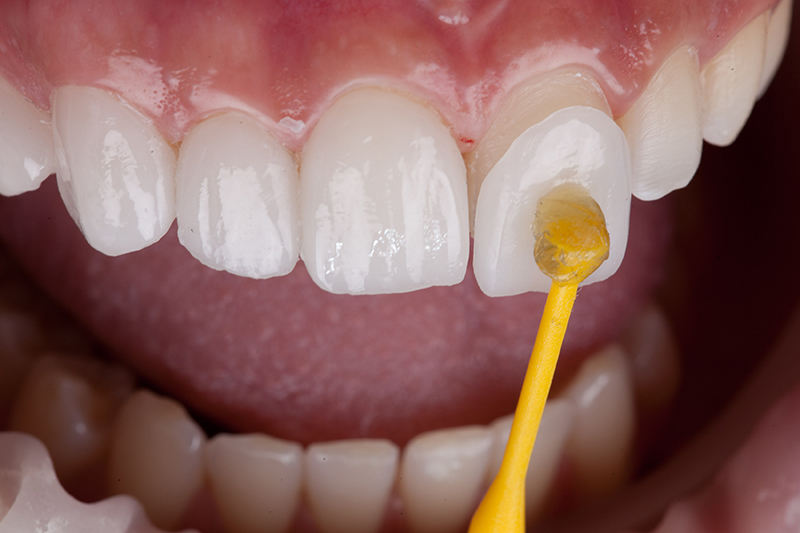
Who Should You See for Dentures or Mouthguards?
If you need dentures or a custom-fit mouthguard, who do you turn to? Do you go to a dentist or a dental technician?
Although you visit a dentist for check-ups and procedures, they will likely refer you to a specialist, a prosthetist, to design, create, and fit your dentures or mouthguards. A dental prosthetist is an expert in removable dental appliances, possessing a high degree of dexterity and keen attention to detail.
Prosthetists often collaborate with dentists and technicians to provide the best care for patients. They may also consult directly with patients in their own clinic or private practice.
A Unique Blend of Clinician and Technician
A dental prosthetist combines the roles of a clinician and a dental technician, ensuring patients receive the best care tailored to their needs.
The following table offers a summary comparison between a dental prosthetist, a general dentist, a prosthodontist, and a dental technician, based on information from the Dental Board of Australia and the Australian Dental Prosthetists Association (ADPA).
| Role | Direct Patient Care | Scope of Practice in Australia | Limitations of Practice in Australia |
| Dental Prosthetist (DP) [2] | Considered primary oral healthcare providers working directly with patients and the public |
|
|
| General Dentist [1] | Provides full clinical diagnosis and treatments |
|
|
| Prosthodontist [3] | Considered dental specialists registered under the AHPRA |
|
Treatment outside prosthodontics |
| Dental Technician [4] | Not permitted to work directly with patients or the public | Fabricate dentures, crowns, bridges, splints, and mouthguards based on prescriptions from a dentist or prosthetist |
|
Therefore, if you need high-quality, professionally-crafted dentures or mouthguards, a dental prosthetist is your go-to expert. Only a prosthetist can provide trusted information on caring for and maintaining your dentures or mouthguards, helping ensure they last a long time.
What Training Do They Have in Australia?
Before anyone can work as a dental prosthetist in Australia, they must complete rigorous training and meet specific qualifications.
Education
A dental prosthetist must complete a Bachelor of Dental Prosthetics degree. Typically, this 36-month program equips students with advanced skills in manufacturing dentures, dental appliances, and mouthguards. The program prepares students for their role as a prosthetist, including impression-taking, technical production, and maintenance of dental prosthetics [5].
Students interested in this program must complete Year 12 education, a minimum ATAR, a VET pathway course, or previous experience [5].
Regulation
Graduates of a Bachelor of Dental Prosthetics degree must first register with the Dental Board of Australia (AHPRA) before practising [6]. This ensures they meet natural standards of safety and ethics. Prosthetists are subject to the same guidelines and standards of conduct as other dental professionals, such as dentists, hygienists, and oral health therapists.
From First Consultation to Final Fitting
A dental prosthetist’s role generally involves creating dentures and mouthguards; however, they also perform other daily activities [7].
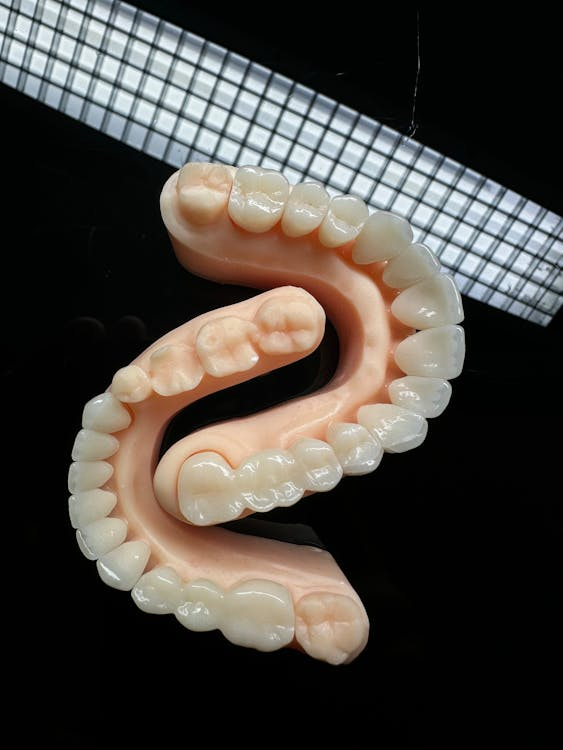
Source: [9]
Patient Consultation & Assessment
A prosthetist meets the patient, conducts an initial assessment, including examination of the oral tissues and consideration of any dental issues, and then takes impressions of the patient’s teeth. They also take the patient’s medical history, noting any specific illnesses or relevant conditions.
Impressions & Records
After the initial consultation, they take digital scans of the patient’s mouth. Digital scans ensure precision in the creation of dental prosthetics. They use the scans to create precise moulds or impressions for fabricating the prosthetics.
Design & Fabrication
A dental prosthetist will now design the denture or mouthguard, either in their own laboratory or on-site. In manufacturing dentures, they “design the smile” as they craft the appliance, ensuring natural appearance and comfortable function.
The ‘Try-In’ Appointment
A wax mock-up of the denture or mouthguard will be ready for checking. The patient will check the appliance for a good fit, bite, and appearance, noting that the colour matches the natural colour of the teeth. It may take two more try-in sessions to get the best fit.
Final Fitting & Adjustments
The patient who fits the finished appliance may request final fine-tuning adjustments. The prosthetist must be sensitive to the patient’s needs to ensure the finished denture or mouthguards fit appropriately.
Repairs and Relines
A dental prosthetist performs maintenance on existing prostheses to ensure longevity. They also educate patients on proper oral hygiene and how to care for their dentures or mouthguards.

Source: [10]
At Aesthetics Dental Clinic in Camden, creating dentures and mouthguards is a team effort. Our prosthetist works closely with our general dentists and oral surgeons, especially for complex cases such as implant-retained overdentures. We ensure your comfort and care throughout the process of creating your dentures or mouthguards.
Our prosthetist works in our state-of-the-art on-site laboratory, where they ensure quality control for all dental prostheses. An in-house facility also allows for faster turnaround times for repairs or adjustments.
You can count on our expertise and patient-first approach to create dentures that restore your smile and the function of your teeth and gums. Our experience and technical expertise enable us to manufacture custom mouthguards that provide not only a precise fit but also comprehensive protection.
Key Reasons to Book a Consultation

Source: [11]
How do you know you need a dental prosthetist? Watch out for the following signs:
You need your first set of full or partial dentures.
You long to smile openly again, to talk and laugh without thinking twice about your teeth. If you have missing, broken, or discoloured teeth that prevent you from smiling, talking, eating, or communicating, you should consult a dental prosthetist.
Your existing dentures are loose, uncomfortable, or broken.
Your dentures tend to become loose when you talk, eat, or speak. They feel comfortable to wear and are starting to show signs of wear and tear. Don’t wait until your dentures break! It’s time to see a dental prosthetist.
You need a professional reline to improve the fit.
Dentures must be relined every 2 to 3 years, or sooner if they feel loose or uncomfortable. Relining dentures improves fit and ensures the best function. A dental prosthetist can help reline your dentures, enhancing fit and function. Our in-house lab will ensure your dentures are relined faster.
You or your child needs a custom-fitted sports mouthguard for maximum protection.
Visit a dental prosthetist if you need a custom-fit sports mouthguard. Whether it’s for you or your child, a custom-made mouthguard provides better comfort and support than cheap boil-and-bite options.
You are considering an implant-supported denture and need to discuss the prosthetic component.
A dental prosthetist can help you prepare for an implant-supported denture. They can answer your questions about the procedure, how to care for this type of denture, and the cost.
Common Questions About Dental Prosthetists
Do I need a referral from a dentist to see a prosthetist?
You don’t need a referral from a general dentist to see a prosthetist. You can book your initial consultation directly through our booking page.
Is the cost of a prosthetist covered by private health insurance?
Yes, private health insurance in Australia can cover the cost of dental prostheses, provided they are covered under the Extras policy. Find out about your dental coverage by contacting your health insurance provider.
Conclusion: Your Partner for a Confident Smile
A dental prosthetist is the most direct, specialised, and expert choice for removable dental appliances. They can handle the process from initial consultation through design and construction to final fitting, ensuring a personalised, precise fit and function.
Whether you need full or partial dentures or sports mouthguards, a dental prosthetist is the master of fit, construction, and maintenance. Book your initial consultation today and start your personalised journey towards the best dental care for you and your family.
References
[1] Australian Dental Association – Scope of practice
[2] ADPA – About the profession
[3] Cleveland Clinic – Prosthodontics
[4] ADA – Dental technician
[5] Courses.com – Bachelor of dental prosthetics
[6] Australian Dental Prosthetists Association Ltd – Registration of dental prosthetists
[7] ADA – Dental prosthetist
[8] Pexels – A close-up shot of a person polishing a denture
[9] Pexels – Detailed dental mould on black background
[10] Colgate – Full dentures, partial dentures, denture care – learn more
[11] Pexels – Patient having an appointment with a dentist