Sports build character, promote perseverance, and nurture discipline. But without the right protective equipment, sports that involve body contact, falls, or flying can result in severe injuries. A sports mouthguard, or mouth protector, is critical safety gear in Australian sports.
All Australian sports clubs have strict rules regarding the wearing of mouthguards. It is mandatory to protect players from serious sporting injuries, including broken jaws and knocked-out teeth.
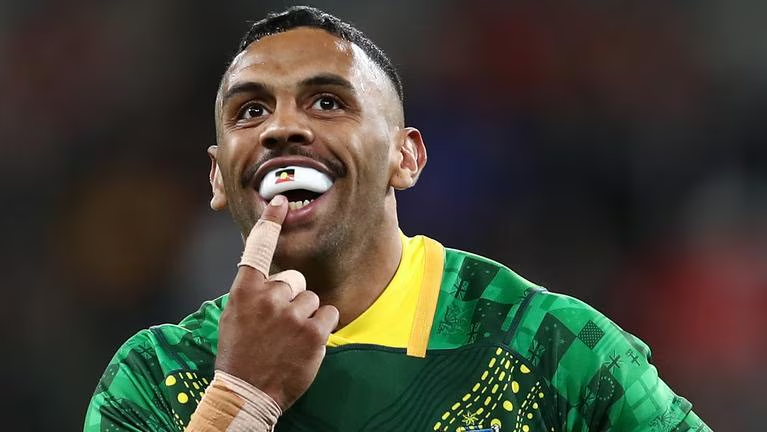
Source: [14]
Highlights of Sports Mouthguards in Australian Sports
- Australia has a “No Mouthguard, No Play” policy, promoted by the Australian Dental Association and Sports Medicine Australia [1]. This policy covers more than 30 sports activities, including training and games.
- Aside from contact sports, players in cricket, basketball, touch football, netball, and skateboarding must also wear mouthguards, as these activities can cause damage to teeth and the mouth [2].
- In 2023 to 2024, cycling had the highest number of sports injury hospitalisations at 12%. Australian rules football had 8.75% and soccer at 8.6% [3].
- The sports mentioned above are the most popular among Australians, with more people participating, increasing the risk of injuries and hospitalisations [3].
- According to studies, around 13.3% to 35.9% of dental injuries in Australia are sports-related [4].
- A major factor driving the rise in sports-related dental injuries is low mouthguard use: only 36% of Australians wear one. Many use “boil and bite” types or wear their mouthguards less frequently [4].
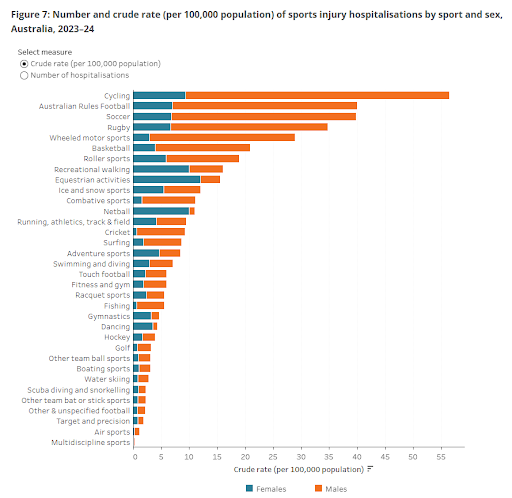
Number of sports injuries and hospitalisations from 2023 to 2024. Source: [3]
A Preventable Epidemic
Dental injuries, especially in high-impact sports, can affect an athlete’s performance and overall health. Data from Victorian hospital emergency departments for 2002 to 2004 indicated approximately 2000 dental injuries, predominantly among people under 25 [5].
Breakdown of Cases of Dental Injuries Due to Sports
- 44% active recreation or leisure activities (cycling, skateboarding, riding a scooter) [5]
- 5% to 14% due to organised sports (football, basketball, cricket, hockey, netball, soccer) [5]
According to data, people with protrusive front teeth are at greater risk of dental injuries. Also, those with inadequate tooth coverage and those undergoing orthodontic treatment are vulnerable.
Dental injuries result in time off from school or work to recover. Treatments can be painful and costly, exceeding the cost of a mouthguard [6]
The Importance of Appropriately Designed Mouthguards in Sports
Custom-designed mouthguards offer the best protection while playing sports. This type protects against dental injuries and reduces the risk of facial trauma, as they are properly fitted.
Compared to store-bought options, custom mouthguards are more comfortable, allowing better breathing and speaking. Because these are well-designed, they can better absorb impact forces, thus preventing concussions.
The Academy for Sports Dentistry reports that athletes wearing custom mouthguards are less likely to sustain major dental trauma than those wearing other types of mouthguards [7]. Therefore, coaches, sports trainers, and parents must ensure their athletes use only well-fitted, custom-made mouthguards.
Are Australians Wearing Mouthguards?
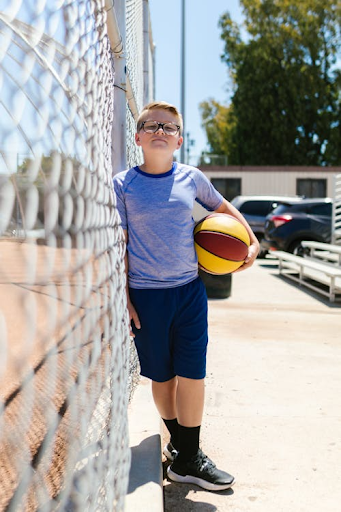
Source: [15]
Campaigns such as the ADA’s “No Mouthguard, No Play,” public education programs, social media, and community action have increased awareness of the benefits of wearing mouthguards. However, actual on-field usage rates remain low, particularly among children playing sports.
Latest surveys indicate that a large number of Australian athletes and parents recognise the value of mouthguards, suggesting that awareness campaigns have successfully delivered the message to prevent dental injuries [9].
Reality of On-Fiend Usage Rates
Actual mouthguard use rates in training and non-mandated sports activities are significantly lower, despite high awareness.
- Only 36% of Australians use mouthguards during contact sports, and fewer wear one during training [9].
- A separate study revealed that mouthguard use among junior Australian football players was 60% during actual matches, whereas during training it was only 2% [10].
- Mouthguard use rates differ by sport and by whether rules are mandatory. Combat sports athletes have a near 100% usage rate, while team sports athletes have around 30% [11].
Reasons for Non-Compliance
Athletes have various reasons for not wearing mouthguards.
- Belief that mouthguards are not required.
- Mouthguards are uncomfortable and interfere with their breathing and speaking
- Perceive that mouthguards can affect their performance as they cannot communicate properly
Also, custom-made mouthguards are costly; thus, athletes either don’t wear one or resort to using boil-and-bite options.
Custom-Fitted vs. Boil-and-Bite – A Data-Driven Comparison
A 2024 study on the comfort and wearability of custom-made vs. boil-and-bite mouthguards among basketball players found that custom-made options are superior [12].
Despite the prevalence of orofacial injuries among basketball players, many athletes avoid the use of mouthguards due to issues with impaired breathing, communication, and nausea. The study compared usage of custom-fit and boil-and-bite mouthguard options among 48 players with the following results:
Boil-and-Bite Mouthguards Group
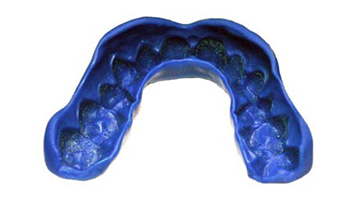
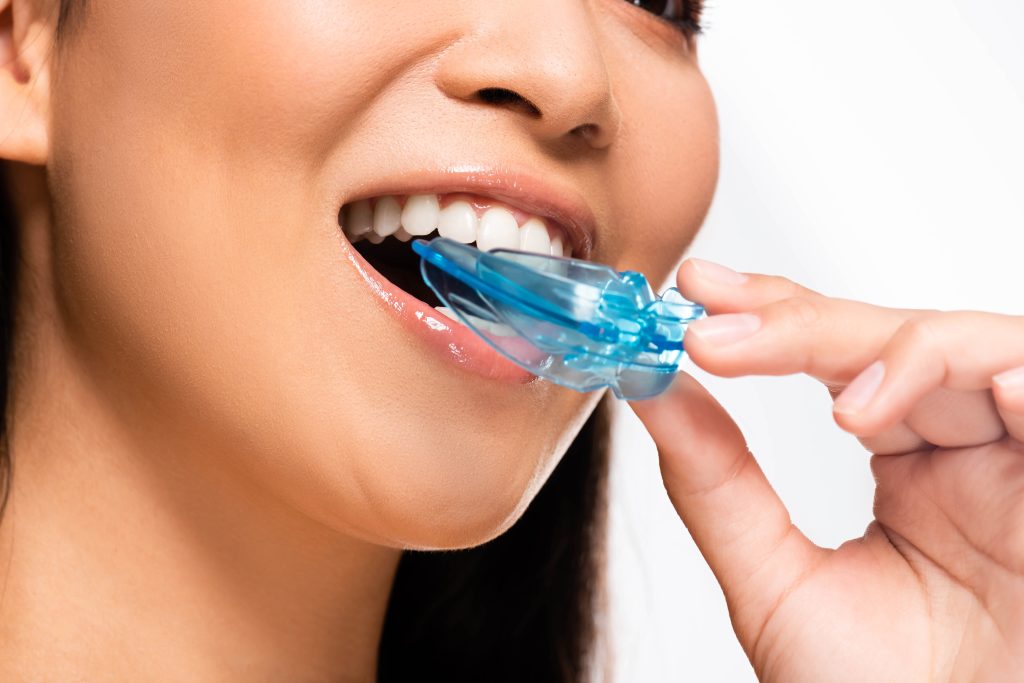
Source: [17]
Players using boil-and-bite mouthguards reported poor stability during the initial measurement. Lower values for stability, comfort, speaking, tiredness, and the need to chew were noted during the second measurement. During the third measurement, the group complained of significantly reduced comfort, breathing, and speaking [12].
Custom-Made Mouthguards Group
In contrast, no significant difference was observed in custom-made mouthguards after these measurements. Therefore, custom-made options outperformed boil-and-bite mouthguards, as they can be tailored to the sport, age, professional level, and presence of other safety equipment [12].
A cheap mouthguard provides a false sense of security. The data is clear: only a custom-fitted mouthguard from a dentist offers real protection. This is an investment in protecting your (or your child’s) smile for life.
Investing in Prevention vs. Paying for a Cure
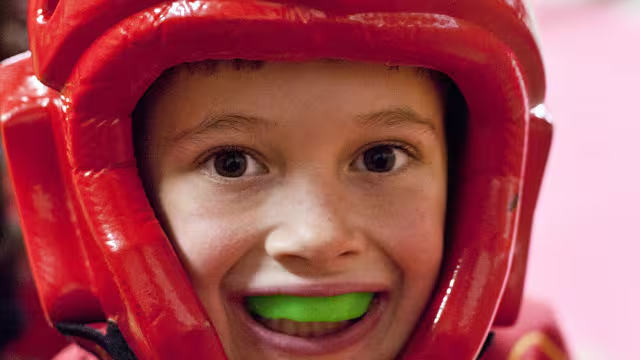
Source: [16]
Not wearing a mouthguard increases the risk of severe dental injuries, including a knocked-out tooth.
The Cost of an Avulsed Tooth
The lifetime cost of a single knocked-out tooth is around $5,000 to more than $20,000 due to complications [13].
- Dental Implants – the initial cost is around $3,300 per implant fixture, including an abutment, plus $2,000 per tooth unit replaced [13].
- Dental Bridge – traditional bridges cost between $600 and $8,000 and may require replacement after several years [13].
- Dentures – prices range from $800 to $15,000, depending on type, material, etc. [13].
The Cost of a Custom-Fit Mouthguard
A custom-made mouthguard can cost around $100 to $200 and could be a one-time or occasional purchase. These are made from an impression taken by a dental professional to ensure the best fit, comfort, retention, and protection. This is an initial investment, a cost-effective and preventive measure for any athlete.
Frequently Asked Questions
1. At what age should my child get their first custom mouthguard?
A child can start wearing mouthguards as soon as they play a sport with any risk of facial injury. This applies to both contact and non-contact sports. Generally, a child as young as six years old can get a mouthguard. This is the time when the first adult molars start to erupt.
2. How often should a mouthguard be replaced?
A sports mouthguard must be replaced at least every 6 to 12 months. It should also be replaced as soon as you notice signs of wear or damage.
3. Can you wear a mouthguard with braces?
Yes, you can wear a mouthguard if you have braces. Mouthguards protect teeth and the soft tissues and prevent damage to your braces.
4. Does my private health insurance cover a custom mouthguard?
Yes, private health insurance in Australia covers custom-made mouthguards under the “Extras” cover. The amount will depend on your policy. Contact your provider to learn more about your coverage.
Data Sources and Citation
[1] Sports Medicine Australia – Mouthguard policy
[2] Teeth.org – Sports mouthguards
[3] AIHW – Sports injury reports
[4] My Family Dental – Mouthguards
[5] Smart Play – Mouthguards, preventing dental injuries in sports
[6] Australian Dental Association – Mouthguard policy
[7] Academy for Sports Dentistry – Dental injuries in sports: prevention, treatment and the role of sports dentistry
[8] NIH – Prevalence of orofacial injuries and the use of mouthguards
[9] ADA NSW – Mouthguards usage
[10] Science Direct – Mouthguard use in Australian football
[11] PLOS – Mouthguard use among combat and team sports
[12] NIH – Comfort and wearability properties of custom-made and boil-and-bite mouthguards
[13] Dental Prices – Teeth replacement and implant prices
[14] Fox News – Josh Addo-Carr of Australia gestures towards his mouth-guard after scoring a try
[15] Pexels – Child leaning on chain link fence
[16] Colgate – Mouthguards and maintenance
[17] International Association of Dental Traumatology – Mouth-formed “boil-and-bite” mouthguard